


Understanding Power Inductor
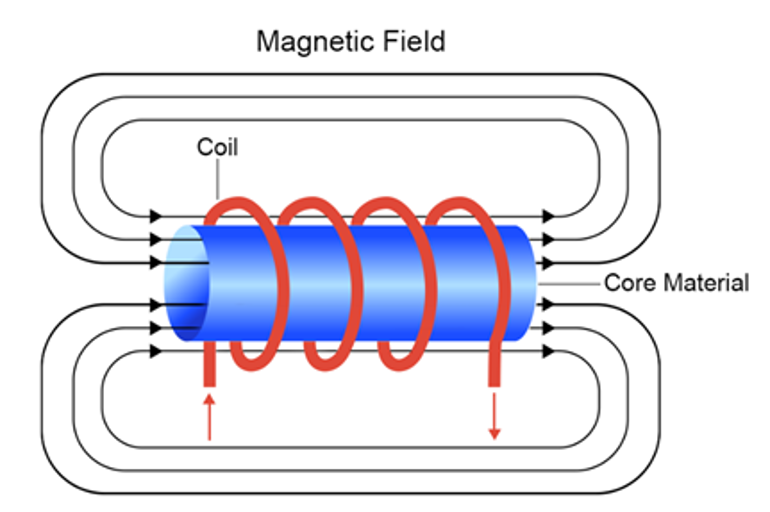
Inductors are passive electrical components that store energy in a magnetic field when an electric current flows through them. They are also known as coils, chokes, or reactors and are made up of an insulated wire wound into a coil. The inductance of an inductor is the ratio of voltage to the rate of change of current and is measured in Henry. Inductors resist changes in current, and they are one of the three passive linear circuit elements that make up electronic circuits, along with capacitors and resistors.
Power inductors are a type of inductor that is designed for high-efficiency power applications. Power inductors typically have higher current and power ratings than standard inductors. They are commonly used in DC-DC converters, power supplies, and voltage regulators, where high efficiency is crucial. Power inductors may also feature magnetic shielding to reduce interference with other electronic components. In addition, they may have a magnetic core made of a high-permeability material, such as ferrite or powdered iron, to increase their inductance and efficiency.
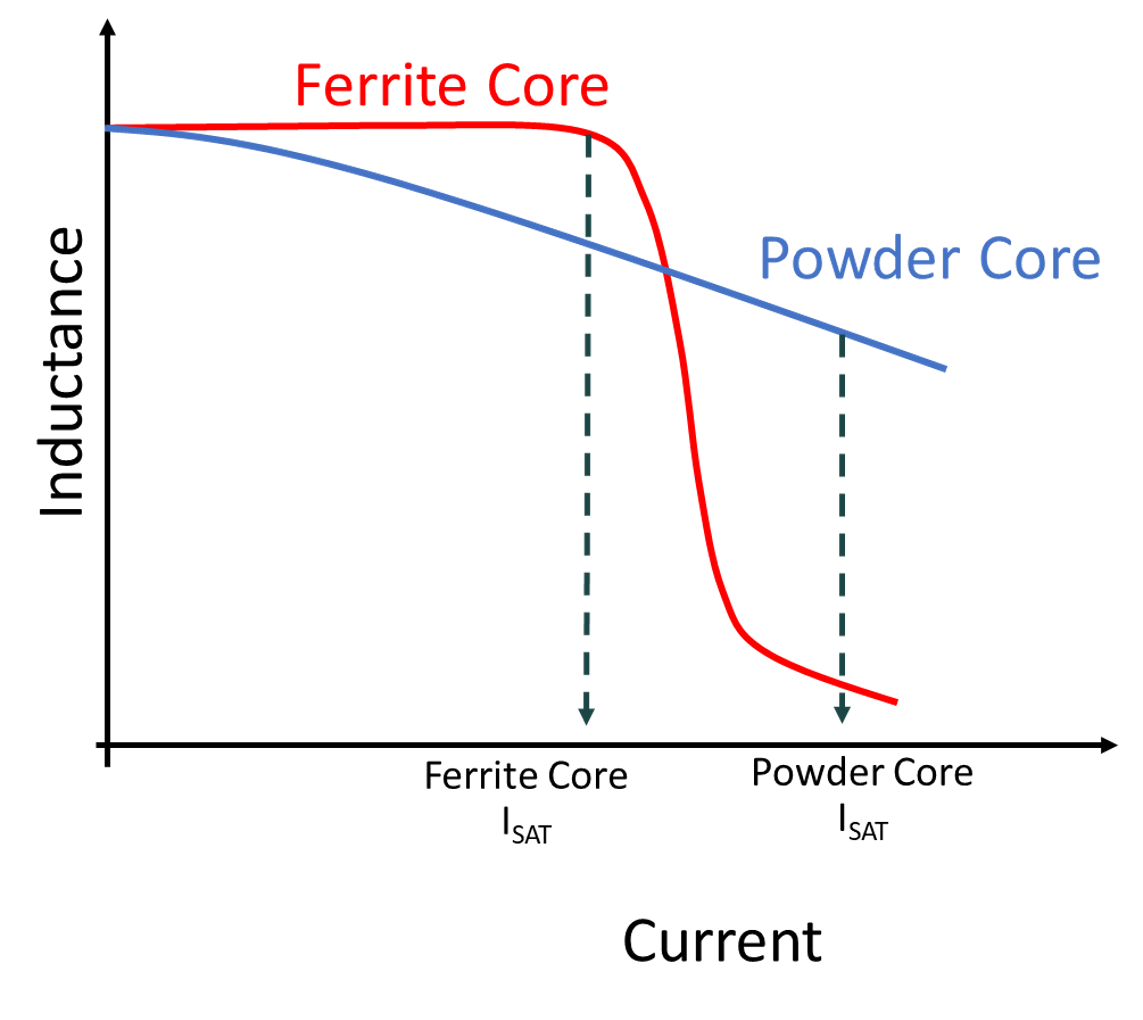
Inductance vs current roll off
Inductance vs current roll off is a critical factor when selecting between ferrite and iron powder materials for inductors. Ferrite materials have a hard roll off, with minimal inductance change vs current up to the saturation current, but a sharp drop in inductance when the current approaches and exceeds the saturation current. Ferrite materials are also sensitive to changes in operating temperature, but offer higher efficiency.
On the other hand, iron powder materials have a soft roll off, with a gradual and steady drop in inductance even beyond the saturation current. They also exhibit more inductance stability vs temperature, with minimal changes in inductance across a wide operating temperature range.
Iron powder materials are generally less expensive than ferrite materials, making them a cost-effective option for some applications. Ultimately, the choice between ferrite and iron powder materials for inductors depends on specific requirements, including inductance value, current handling capacity, operating temperature range, and cost considerations.
Powder material introduction
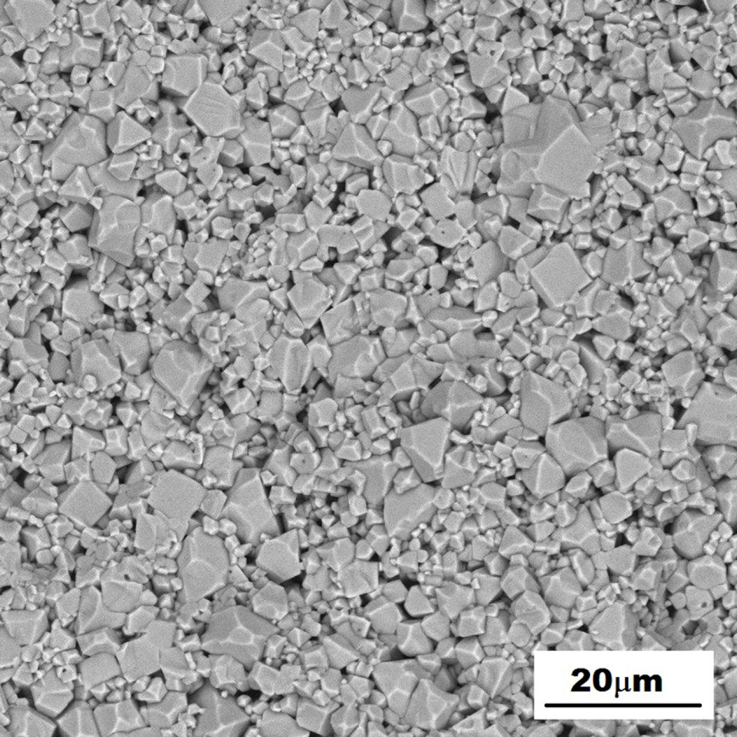
Powder cores have become a popular choice for power inductor design in DC/DC applications due to their unique properties. They can be easily formed into various shapes, making them suitable for different types of power inductors.
Powder cores have a low core loss, generating less heat compared to other materials under the same operating conditions. This makes them ideal for high-power applications with high current density where heat dissipation is a concern. Powder cores offer a wide range of permeability values, allowing for precise control over the magnetic properties of the core. This makes them useful in applications where specific magnetic properties are required, such as in power inductors used in DC/DC converters.
Overall, powder cores are an attractive option for designers looking to optimize the performance and efficiency of power inductors in DC/DC applications, thanks to their versatility, low core loss, precise control over magnetic properties, and excellent temperature stability.


